
AEC Technical Insight / Healthy Buildings / Water Efficiency
WELL and LEED Benefits of Advanced Touchless Restroom Technology
How sensor-activated faucets, coordinated soap dispensing, disciplined water management, and service-ready restroom engineering can support wellness objectives and green-building performance in stadiums, theaters, hospitality properties, and high-traffic public venues.
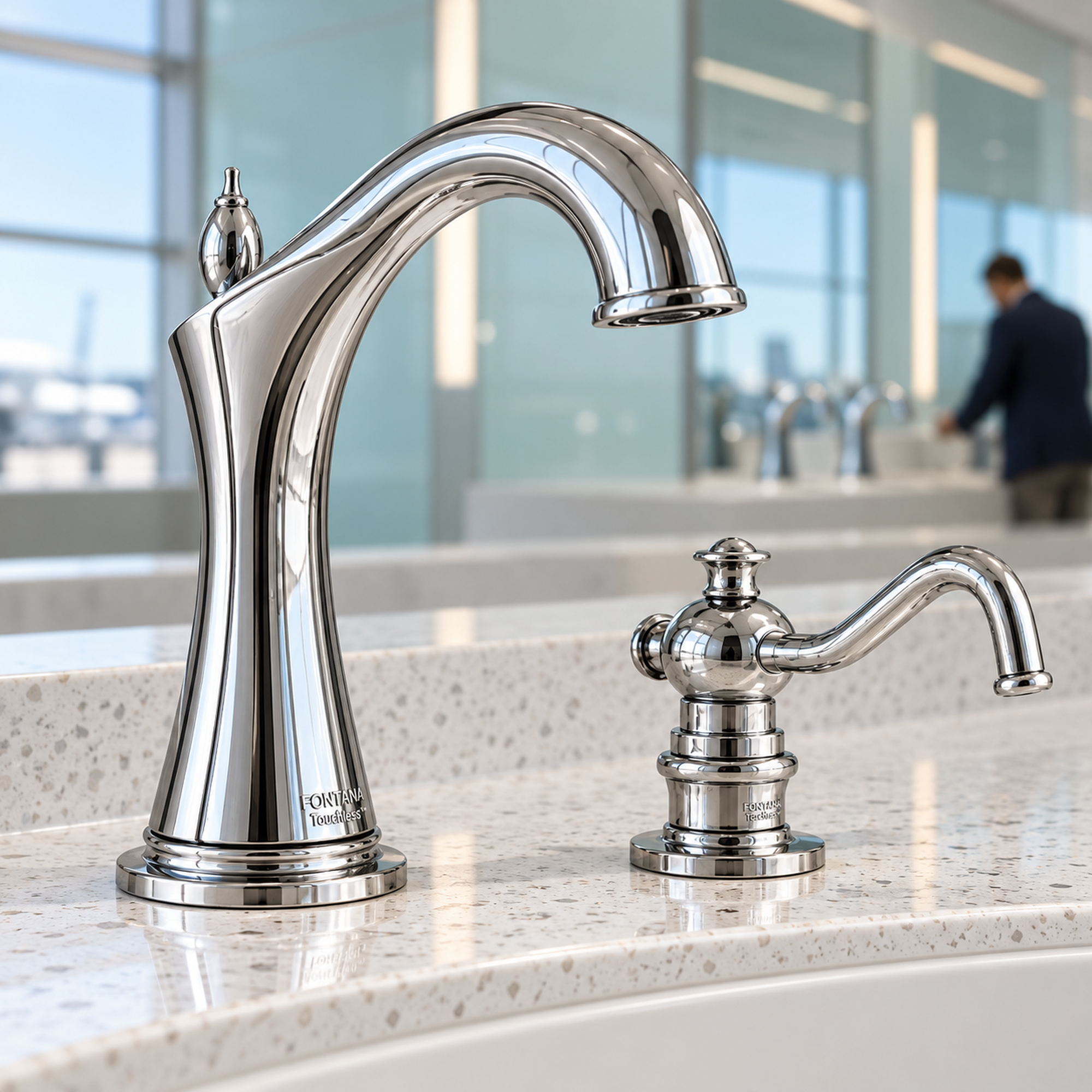
Touchless restroom technology is increasingly evaluated as building infrastructure rather than an isolated fixture upgrade. Architects, plumbing engineers, sustainability consultants, and facility teams must coordinate how a sink operates, how much water it delivers, how a person approaches it, how staff keep soap available, and how the assembly can be maintained through years of demanding use. Those decisions can support healthier restroom experiences and more disciplined resource use, particularly in facilities where attendance rises sharply during games, performances, conferences, or scheduled shifts.
The critical distinction is that WELL and LEED evaluate different outcomes. WELL emphasizes the conditions and practices that support occupant health, including handwashing access and hygienic operation. LEED emphasizes verifiable building performance, including water-efficiency measures and documentation. A touchless faucet is not itself a WELL or LEED certification, and its presence does not automatically confer a credit. The appropriate specification must be supported by the selected rating-system version, actual product data, compliant layouts, and completed project documentation.
Framework Alignment
Where Advanced Touchless Restrooms Fit Within WELL and LEED
An effective sustainability specification translates broad goals into testable outcomes. The most useful conversations begin with the applicable certification pathway and the responsibilities of the design team, rather than a general assertion that automatic faucets are sustainable.
| Framework | Relevant Objective | Potential Contribution | Documentation |
|---|---|---|---|
| WELL v2 | Handwashing, hygiene support, access to facilities, and water management. | Hands-free devices can assist with hygienic use when paired with suitable sinks, soap, drying provisions, accessibility, and cleaning protocols. | Feature applicability, annotated plans, device specifications, handwashing supplies, and operations policies. |
| LEED v4.1 | Indoor Water Use Reduction and relevant prerequisites and credits. | Verified fixture flow rates and effective automatic shutoff can contribute to calculated water savings. | Fixture schedule, flow-rate evidence, usage assumptions, and LEED water-use calculations. |
| LEED v5 | Minimum Water Efficiency, Enhanced Water Efficiency, metering, and leak detection as applicable. | Efficient fittings and measured performance support water-management strategies. | Rating-system requirements, compliance path, fixture data, and metering provisions. |
| Facility Sustainability Goals | Water stewardship, maintainability, resilience, and responsible operating cost. | Coordinated sensors, accessible components, and standardized dispensers can reduce waste and downtime. | Commissioning records, maintenance logs, replacement strategy, and water monitoring. |
Read More: Rating-System Versions and Certification Requirements
LEED v4.1 and LEED v5 use different organizational structures for water-related requirements. A credit name or calculation method from an older version should not simply be transferred to a newer project.
Similarly, WELL’s 2026 One WELL revisions reorganize several hygiene-related strategies, including hands-free restroom devices and effective handwashing. The project administrator should verify the elected version, applicable addenda, scope, and achievement pathway before attributing compliance to any fixture.
Review the LEED v5 Change Summary and the WELL Revision Guide .
Water Efficiency
Water Conservation Begins With Verified Flow and Controlled Runtime
Sensor operation can stop water after hands leave the detection zone, reducing the potential for a faucet to remain running between users. This operating behavior is valuable, but it should not be confused with the fixture’s certified flow rate.
The engineering team must confirm the specified gallons per minute, pressure conditions, maximum activation period, and reliability of automatic shutoff.
The U.S. Environmental Protection Agency identifies 0.5 gallons per minute or less as an efficient criterion for public lavatory faucets. This is not the same as applying the consumer WaterSense label to every commercial model. Verify the product category and avoid unsupported label claims.
Read More: Calculating Water Savings Accurately
For a constant-flow faucet, a simple starting calculation is gallons used = flow rate (gpm) multiplied by cumulative running minutes. For metering or sensor fixtures, actual activation patterns, timed cycles, flow variation, user behavior, and false triggering must also be considered.
The calculation should use the project’s required LEED methodology and baseline rather than multiplying an assumed fixture percentage by the entire building’s demand. For new and existing fixtures, the project boundary and rating-system requirements determine which quantities enter the calculation.
Designers should also consider whether a very low flow impairs effective handwashing or increases use duration. Water conservation is most successful when stream quality, basin compatibility, and user comfort remain adequate.
Health and Wellness
How WELL-Oriented Restroom Design Supports Effective Handwashing
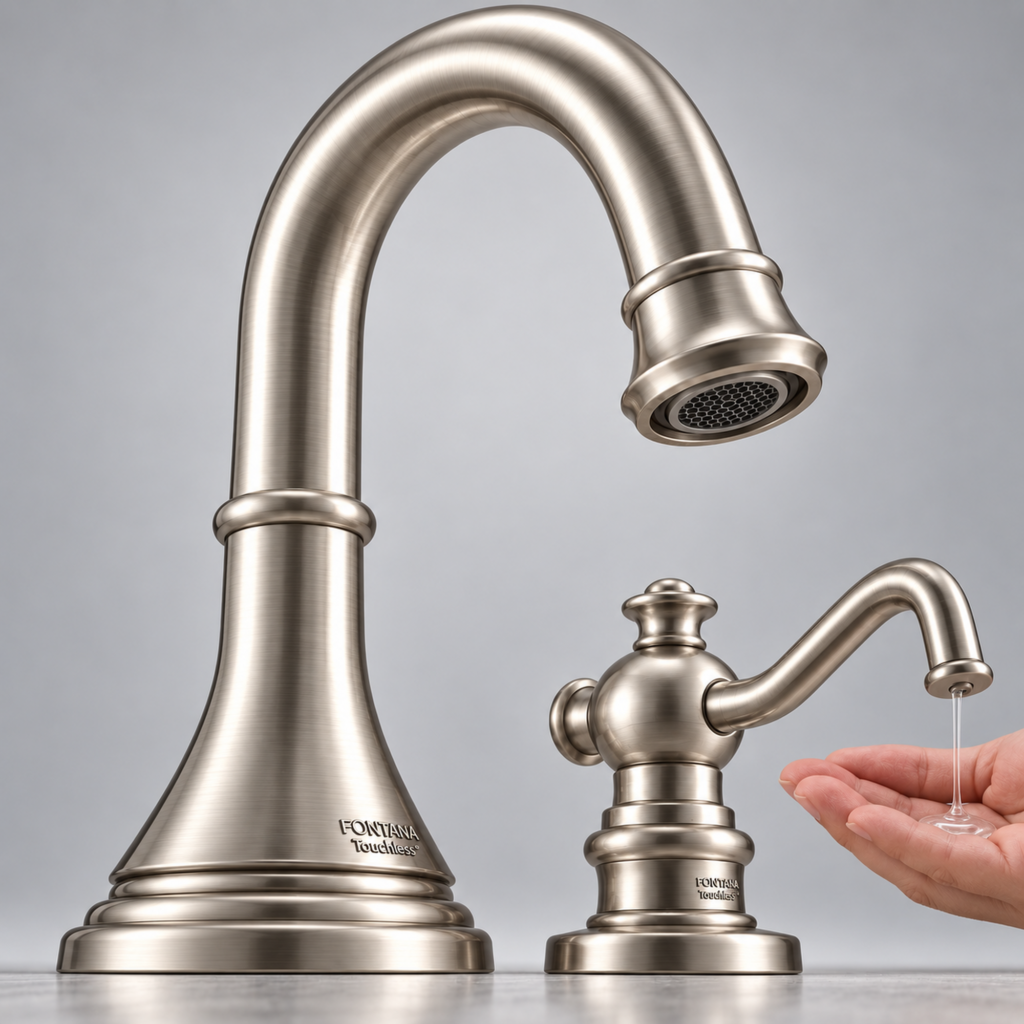
Hands-free hardware can reduce the need to touch faucet controls after handwashing, but the more important objective is a complete, accessible, and reliably stocked hygiene station. Automatic water delivery without available soap, clear hand-drying facilities, or suitable basin dimensions is an incomplete wellness strategy.
Intuitive Use
Position the spout and sensor so users can activate water without awkward movement or searching for a hidden detection zone. Confirm accessible reach and clearances under the applicable accessibility standards.
Reliable Supplies
Specify soap provision, refill access, hand-drying arrangements, and cleaning procedures as a coordinated sequence. A dispenser that is repeatedly empty undermines otherwise capable hardware.
Water Safety
Review temperature control, stagnation risk, flushing practices, and water management plans. Touchless activation alone does not resolve microbial hazards or substitute for a building water safety program.
From One Faucet to a Complete Hygiene System
WELL v2 includes hygiene-support provisions associated with handwashing and restroom accommodations. The 2026 One WELL revision guide moves several strategies, such as hands-free restroom devices, effective handwashing design, and handwashing supplies, into the revised Materials concept.
For active registrations, the project team should follow the appropriate scorecard and revision history rather than treating a feature reference as universally interchangeable.
Coordinated soap dispensers, faucet spacing, clear counter areas, accessible paths, and appropriate drying locations can improve the usability of public washrooms. These design features are especially important at stadium concourses, concert halls, transportation terminals, and healthcare-adjacent facilities, where large numbers of people may use the same facilities within a compressed period.
Read More: Accessibility, Hygiene, and User Experience
Accessible restrooms must be evaluated as complete environments. Verify sink height, knee and toe clearances, forward approach, controls, operable parts, maneuvering clearances, and reach ranges under applicable ADA and ICC A117.1 provisions.
A sensor that removes manual operating force does not automatically establish accessibility compliance. Avoid locating dispensers or waste receptacles where they obstruct accessible routes.
For mixed-use venues, consider family facilities, companion-care requirements, and the needs of different age groups.
Architecture and MEP Coordination
Advanced Sensors Need a Complete Mechanical and Electrical Specification
Infrared, time-of-flight, and other electronic sensing approaches offer different detection behaviors. None should be specified by marketing terminology alone. The project team should document detection range, reflective-surface sensitivity, shutoff behavior, solenoid access, supply pressure, thermal protection, power strategy, and fault recovery. Repeatable details reduce construction ambiguity when a building uses dozens or hundreds of stations.
| Specification Field | Engineering Decision | Why It Matters |
|---|---|---|
| Flow, Pressure, and Outlet | State gpm, test pressure, aerator or laminar outlet type, and usable operating pressure. | Protects water-use calculations and stream performance. |
| Sensor and Controls | Confirm sensing technology, field adjustment, timeout, activation delay, and failure behavior. | Limits unintended discharge and user frustration. |
| Power and Isolation | Coordinate battery, AC, DC, or hybrid configuration; protected cable routes; power access; local isolation. | Reduces service time and installation conflicts. |
| Mixing and Temperature | Specify appropriate temperature controls, mixing arrangement, and scald protection. | Supports predictable, safe outlet conditions. |
| Construction and Durability | Review material, corrosion resistance, fasteners, vandal protection, replaceable components, and cleaning compatibility. | Supports longevity under public-use conditions. |
| Submittals | Request dimensioned drawings, installation instructions, testing data, BIM objects, and maintenance documentation. | Improves design review, installation, and handover. |
Read More: Plumbing and Water Quality Standards
Depending on jurisdiction and product type, relevant review may include ASME A112.18.1/CSA B125.1 for plumbing supply fittings; NSF/ANSI/CAN 61 and 372 for applicable drinking-water contact and lead-content requirements; ASSE 1070 where point-of-use temperature limiting is required; and ASHRAE 188 as part of Legionella risk management.
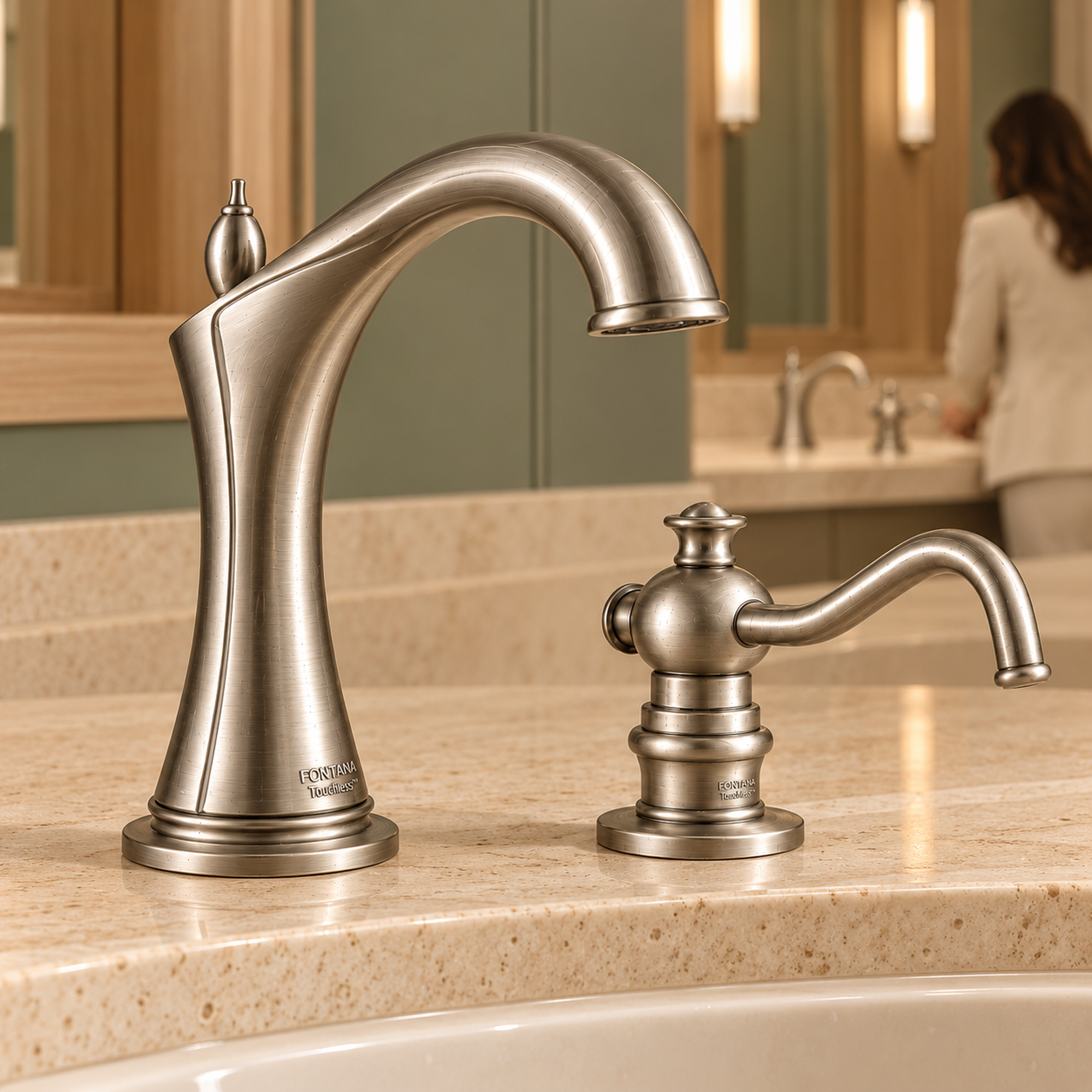
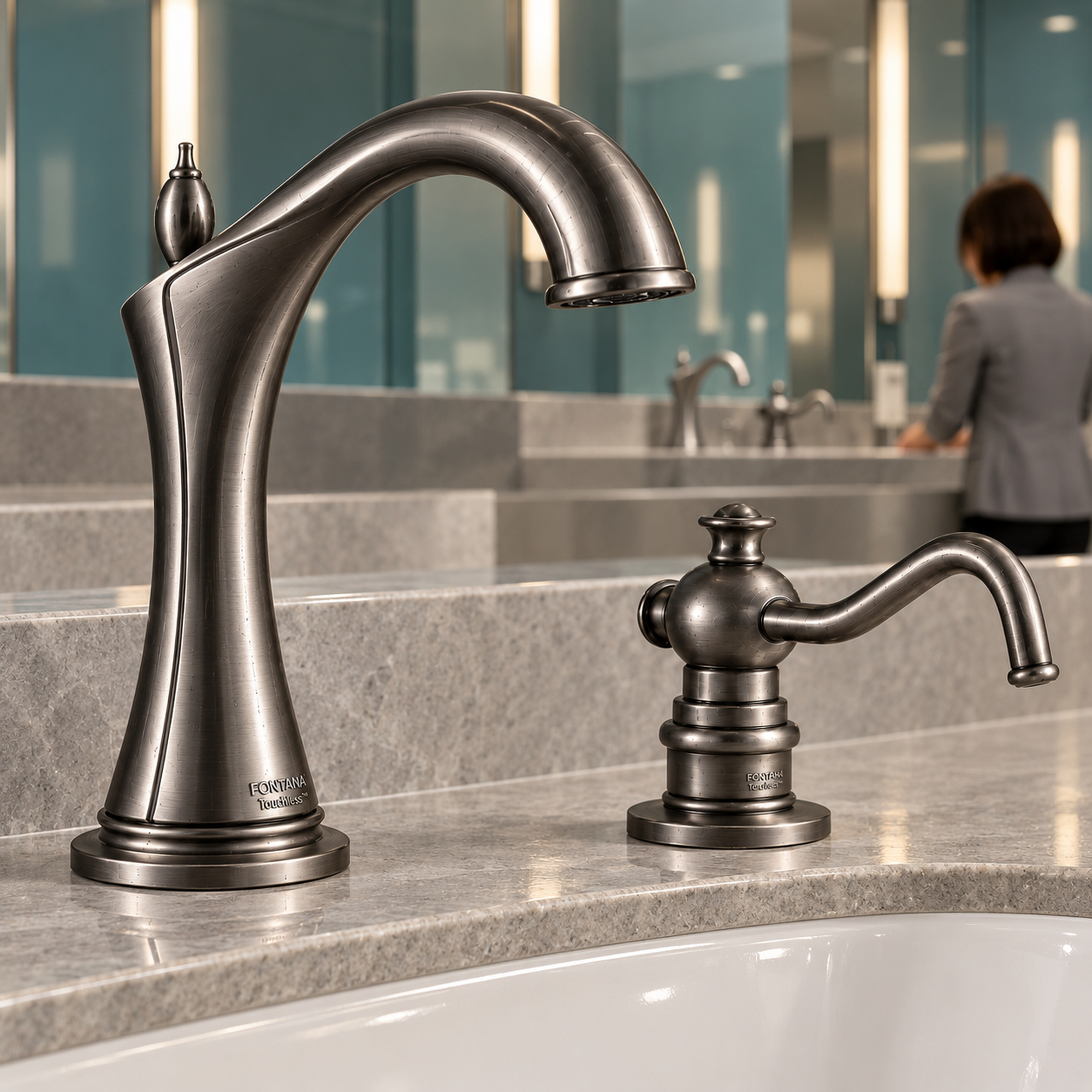
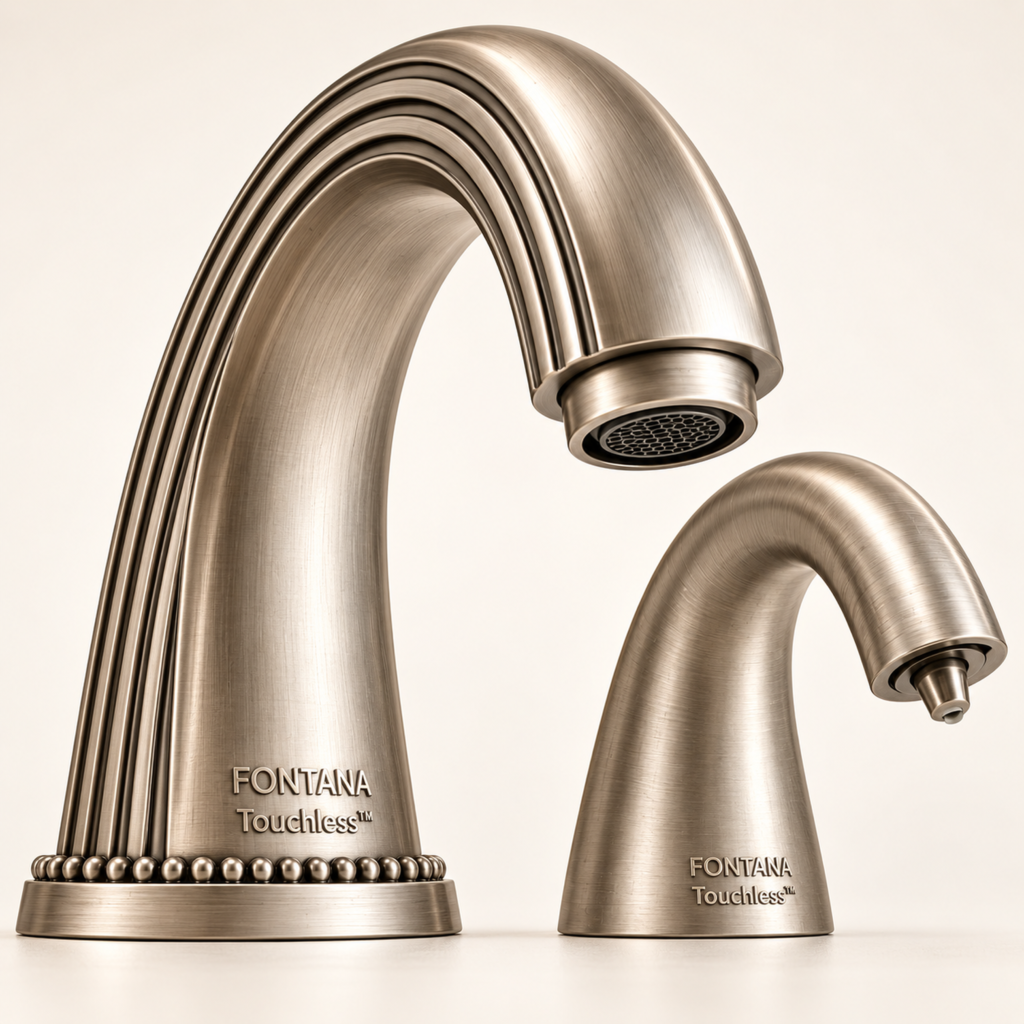
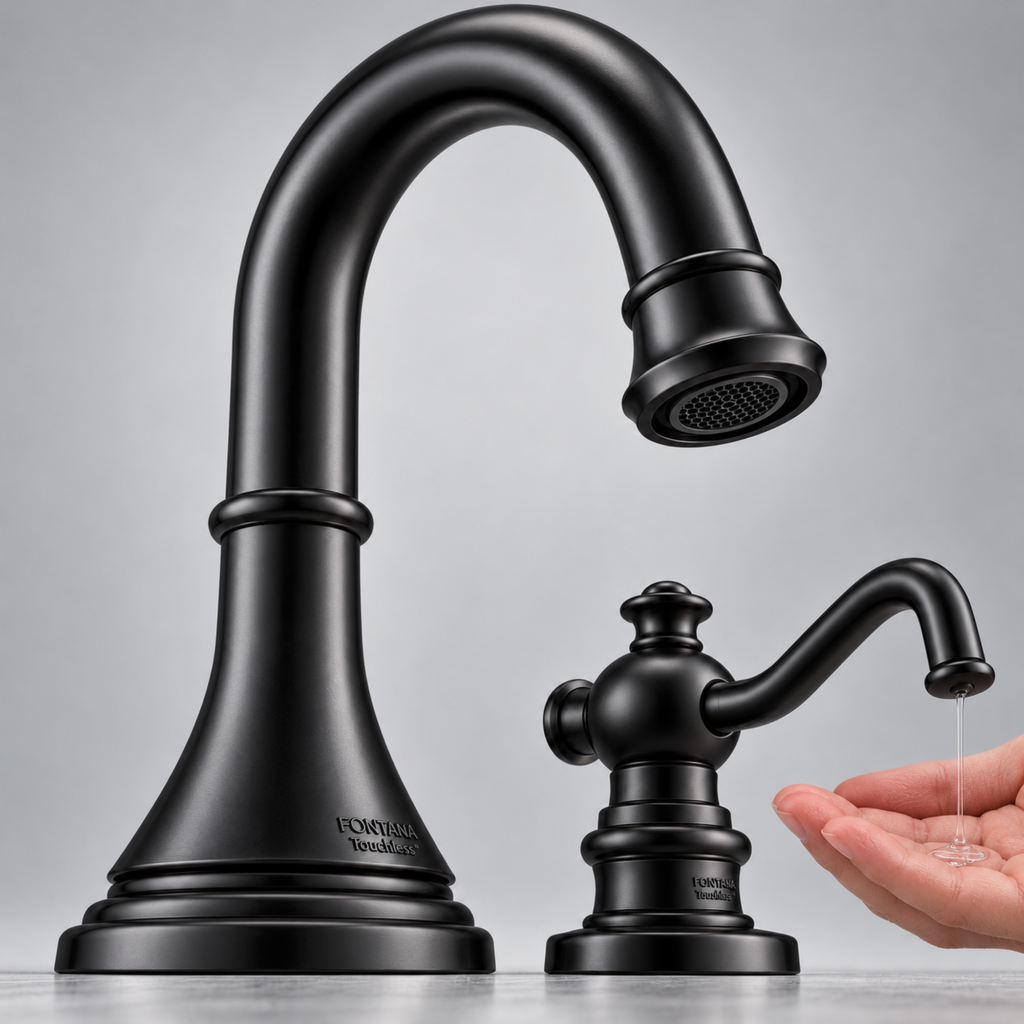
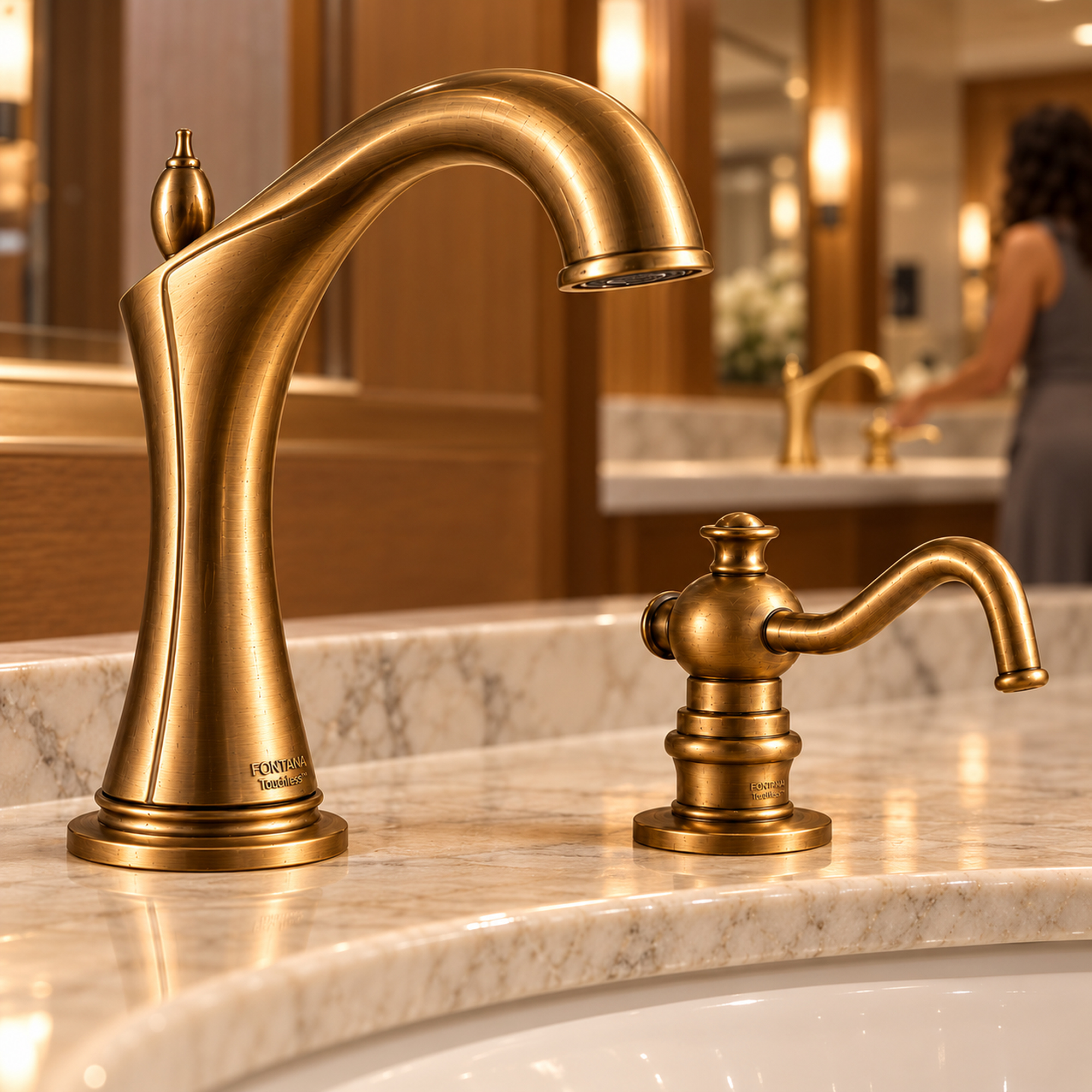
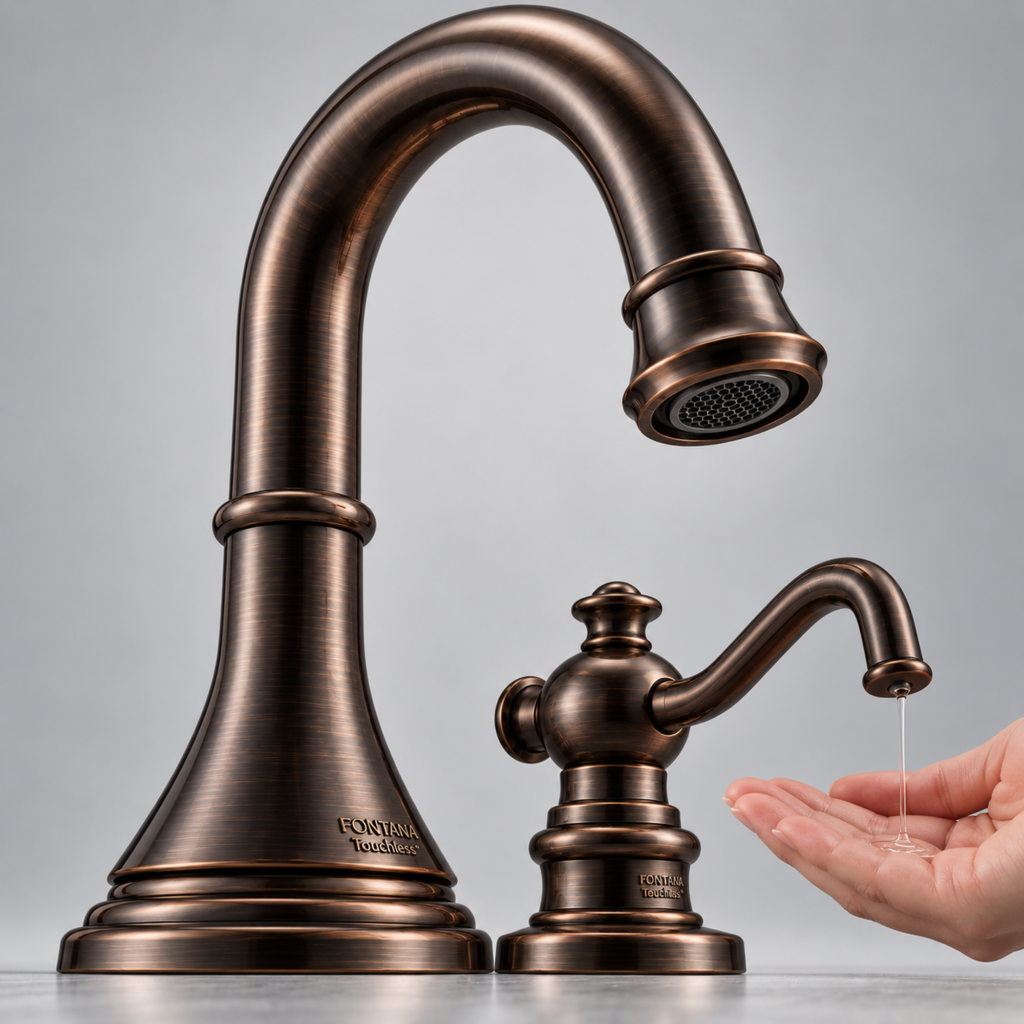
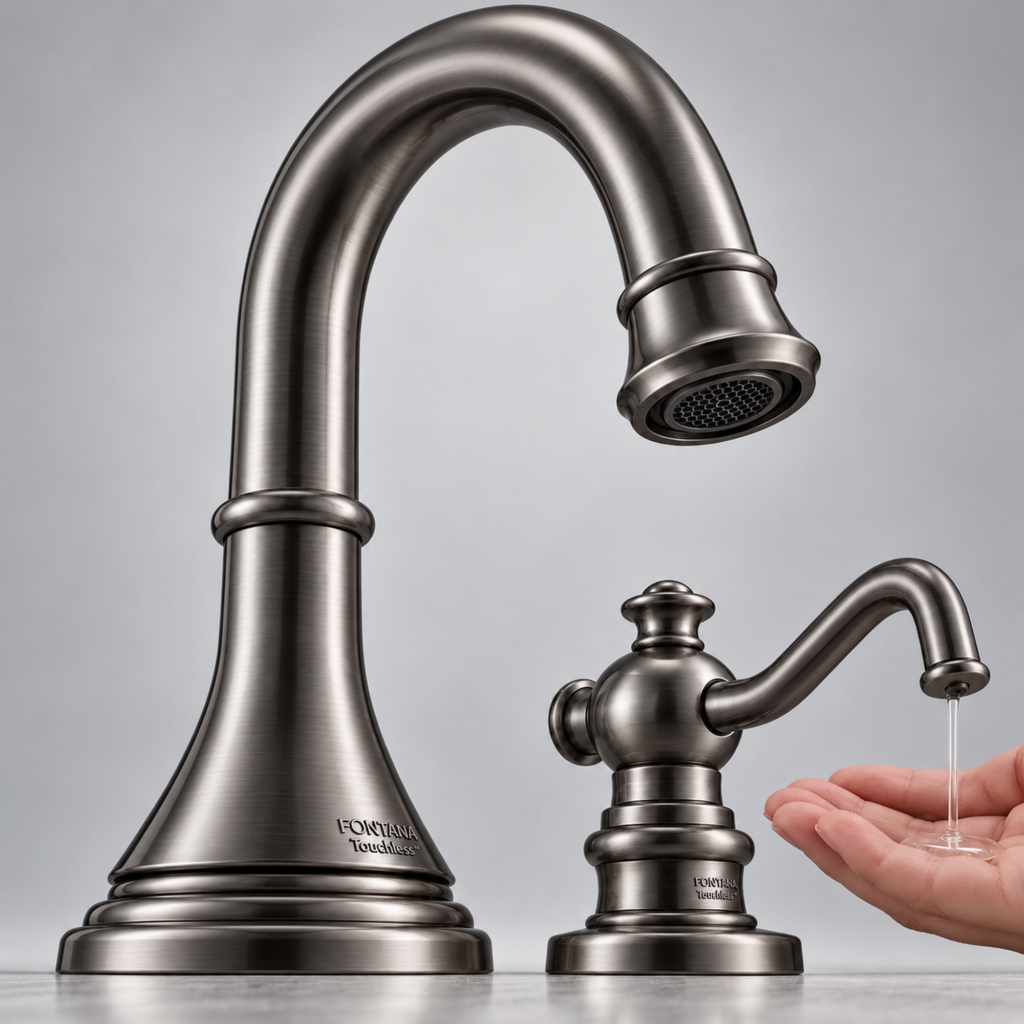
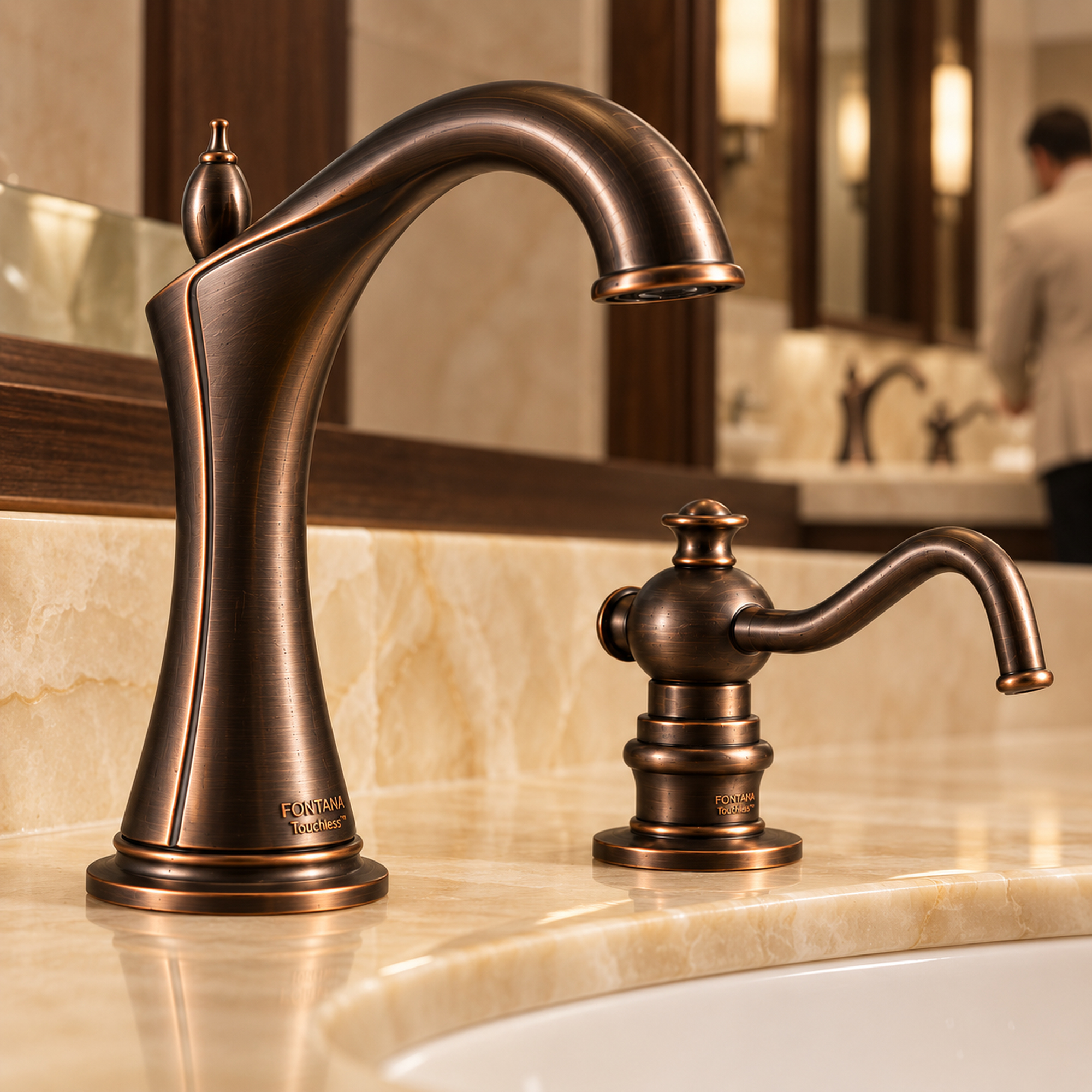
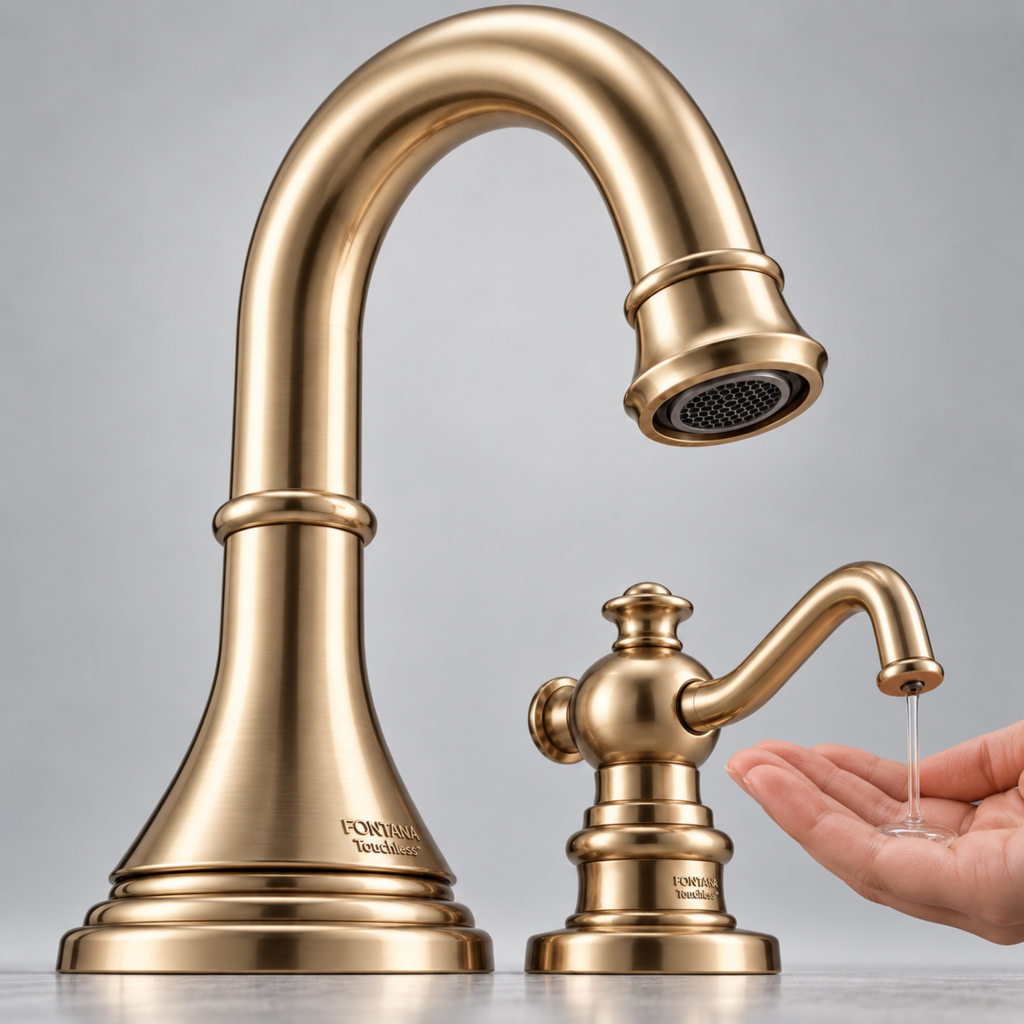
These are examples of standards to evaluate, not certifications claimed for every Fontana fixture pictured in this article. Require documentation for each proposed model and confirm current local plumbing, energy, and accessibility requirements.
Stadiums, Theaters, and Public Projects: Sustainability at Operational Scale
Large-event facilities share an operational challenge: intense demand during a limited number of busy minutes. The following FontanaShowers reference pages illustrate the types of stadium, university, architectural, and cultural-venue applications to consider. Project-specific products, procurement status, and installed conditions should be confirmed directly with the responsible project team.

Las Vegas MLB Stadium
Review the restroom-selection context for a major stadium development where repeatable faucet operation, durability, and service planning are critical design priorities.
Explore the Las Vegas MLB Stadium reference →
UNL Memorial Stadium
Examine chrome touchless faucet planning for a high-traffic university sports venue, with attention to short event-day peaks and standardized sink stations.
Explore the Memorial Stadium reference →
Virginia Architectural Projects
Consider touchless fixtures in public-oriented performing-arts and architectural settings where visual compatibility and accessible maintenance must coexist.
Explore Virginia architectural faucet applications →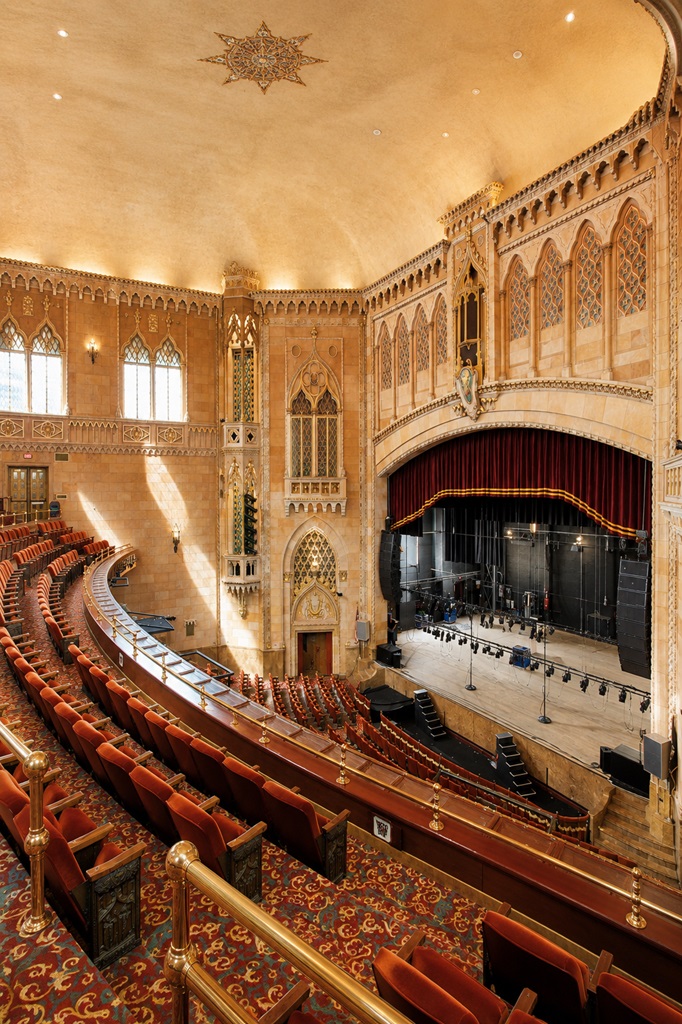
Hershey Theatre, Pennsylvania
Explore the integration of touchless restroom systems into a historic entertainment venue with event-driven traffic and maintenance considerations.
Explore the Hershey Theatre reference →Apply the lesson, not an assumed performance result
Project references can illustrate specification priorities, but they are not substitutes for certified flow data, as-built records, metered savings, or independent verification of a particular venue’s fixture installation.
Long-Term Stewardship
Lifecycle Benefits Depend on Maintenance and Replacement Planning
Automation does not eliminate maintenance; it changes the maintenance profile. Sensors, solenoids, strainers, filters, battery packs, power supplies, and soap-delivery components must remain accessible.
Facility managers need a clear plan for routine inspection, cleaning, controlled repairs, and system restart after power or water interruptions. Standardized fixture families across a large venue can simplify training and spare-parts inventory, while replacement continuity may reduce the frequency of disruptive renovation work.
Read More: Monitoring Water Demand and Performance
Water leakage, unexpected runtime, and repeated false activation can undermine expected savings. Operational staff should record recurring issues, calibrate detection zones where supported, inspect flow-regulating devices, and compare consumption patterns with attendance and operating hours.
Treat any proposal for building management system integration as a separate controls requirement: many stand-alone sensor faucets do not supply network-ready usage data without additional hardware.
Read More: Facility Maintenance Planning
Document the required inspection interval, recommended spare parts, shutoff locations, soap-refill procedure, sensor-cleaning guidance, battery replacement access, and response process for a fixture that does not shut off.
At multi-station counters, identify which sections can be isolated without interrupting an entire restroom. When using centralized soap delivery, check compatibility, reservoir sizing, refill ergonomics, tubing routes, and cleaning procedures.
Review actual operations records before claiming reduced labor hours or total cost of ownership.
Documentable Performance
How AEC Teams Turn Touchless Technology Into Verifiable Outcomes
Specification documents should identify the precise fixture configuration, supporting test data, and applicable rating-system strategy. Commissioning should confirm that the installed system behaves as intended instead of relying on the manufacturer’s nominal sensor designation. The same method can be repeated across fixture banks to establish a consistent record for owner turnover.
Design and Procurement
- Confirm the LEED and WELL versions registered for the project and identify the relevant requirement owners.
- Schedule flow rates, supply conditions, product codes, finishes, mounting, power, accessible clearances, and required compliance evidence.
- Protect design intent during submittal review and substitution evaluation; require engineering equivalency, not merely a similar appearance.
- Coordinate soap delivery, drying, waste collection, and service panels with architectural plans.
Installation and Post-Occupancy
- Measure water flow under applicable test conditions and confirm automatic shutoff and maximum run period.
- Check sensor response with actual basin geometry, reflections, lighting, counter finishes, and adjacent fixtures.
- Document power-loss behavior, isolation valves, temperature controls, and maintenance access.
- Review measured water trends and facility work orders after occupancy before publishing sustainability or performance results.
What Constitutes a Credible Certification Claim?
The strongest claim identifies the specific rating system and version, the applicable requirement, the actual installed fixture, and the supporting evidence.
A product may be suitable for a sustainable design strategy without being individually certified by WELL or LEED. When project outcomes have not been verified, describe the fixture as potentially supportive of the design objective, not as automatically earning points.
Practical Questions
Frequently Asked Questions
Do Touchless Faucets Automatically Earn LEED Points?
No. The project must satisfy the selected LEED rating system’s applicable prerequisites and credits. Fixture flow rates may contribute to a calculated indoor water-efficiency result, but a sensor faucet alone does not earn a credit.
Does Hands-Free Hardware Make a Restroom WELL Compliant?
No. Hands-free operation may support particular WELL hygiene strategies, but successful compliance depends on relevant feature requirements, the registered version, handwashing provisions, accessible design, supplies, and documentation.
Is 0.5 GPM Appropriate for a Commercial Public Lavatory?
EPA uses 0.5 gpm or less as an efficiency criterion for public lavatory faucets. Applicable plumbing code, project specifications, pressure conditions, and the particular LEED framework must still be checked. Do not assume a commercial public-lavatory model carries a WaterSense label.
Can Automatic Fixtures Increase Water Usage?
Yes. Poorly adjusted detection zones, false activations, or prolonged cycles can offset expected savings. Sensor placement, stream quality, commissioning, and maintenance all influence actual consumption.
What Is the Most Important Early AEC Coordination Step?
Agree on the applicable performance targets, fixture schedule, basin geometry, power and plumbing interfaces, accessible routes, and maintenance access before repeating the detail throughout the building.
Design Outcome
A More Sustainable Restroom Is a Better Coordinated Restroom
Touchless restroom technology can become a meaningful part of a green-building and wellness strategy when it is specified as an integrated system rather than a collection of decorative fittings. The value lies in measurable flow, predictable activation, accessible handwashing, dependable soap and drying arrangements, safe water management, efficient maintenance, and documentation that allows the owner to validate performance.
In stadiums and entertainment venues, the same discipline also supports faster facility response during peak-attendance periods and stronger lifecycle planning.
For architects, engineers, developers, and facility teams, the goal is straightforward: select a restroom system that people can use confidently, that maintenance teams can support without needless disruption, and that sustainability consultants can evaluate against the correct WELL and LEED criteria.
Explore Touchless Restroom Systems for Large Public Venues
Review coordinated FontanaShowers venue resources and begin an AEC specification discussion using verified product dimensions, flow data, sensor requirements, and service information.
Explore Stadium and Venue Portfolio Review Peak-Attendance Fixture PlanningPrimary Standards and Guidance
Official Reference Sources
For compliance determinations, use official rating-system publications and applicable adopted codes. The following resources support the technical distinctions discussed in this article.
- USGBC: LEED v4.1 Indoor Water Use Reduction Guidance
- USGBC: LEED v5 BD+C Rating System
- USGBC: LEED v4.1 to v5 Changes for BD+C
- IWBI: WELL v2 Hygiene-Support Feature Changes
- IWBI: One WELL Revision Guide
- EPA WaterSense: Public Lavatory Efficiency and Label Eligibility
- EPA WaterSense: Faucet Flow Rates and Labeling