
Commercial Touchless Faucet Failure Review: Which Designs Are Easier to Maintain After 5 Years?
A sensor faucet that performs perfectly on opening day can become expensive if technicians struggle to reach its battery, solenoid, filter or electronics five years later. This independent review examines commercial touchless faucets from a facility-maintenance perspective: what fails, what requires routine attention, and which design characteristics can reduce service time across large restroom portfolios.
How We Evaluate Long-Term Serviceability
This is a technical document review—not a claim that we operated each faucet continuously for five years. Our maintenance assessment examines published manufacturer architecture, service information and replaceable-component strategy.
Component Access
How technicians reach batteries, electronics, valves and controls.
Diagnostics
Indicators or documentation that simplify fault identification.
Solenoid & Valve
Protection, accessibility and service implications.
Debris Control
Filters and strainers protecting sensitive water-control components.
Power Service
Battery replacement or electrical-system maintenance implications.
Documentation
Repair guides, installation information and specification support.
What Actually Requires Attention?
| Symptom | Possible Area | First Maintenance Check |
|---|---|---|
| Faucet does not activate | Power / sensor / solenoid | Check power status before replacing components. |
| Intermittent activation | Sensor zone | Inspect sensing area and commissioning settings. |
| Reduced flow | Aerator / strainer / supply | Inspect debris-control components and inlet condition. |
| Continuous flow | Sensor / solenoid / debris | Check detection field and valve operation. |
| Short battery life | Power architecture | Review battery condition, activation frequency and electrical options. |
Fontana Commercial Automatic Temperature-Control Sensor Faucet

Fontana Commercial Automatic Temperature-Control Thermostatic Sensor Faucet
This Fontana platform is especially relevant to maintenance teams because its published documentation identifies diagnostic indicators for power, low battery and solenoid function. A built-in cleanable strainer helps prevent debris from reaching the solenoid valve, while AC/DC options provide flexibility in power planning.
Diagnostics and strainer access can shorten troubleshooting.
Thermostatic architecture adds another component requiring periodic verification.
Best maintenance fit: Airports, healthcare, office portfolios and large commercial facilities.
Review Fontana Maintenance Architecture →Sloan BASYS® Commercial Sensor Faucet Platform
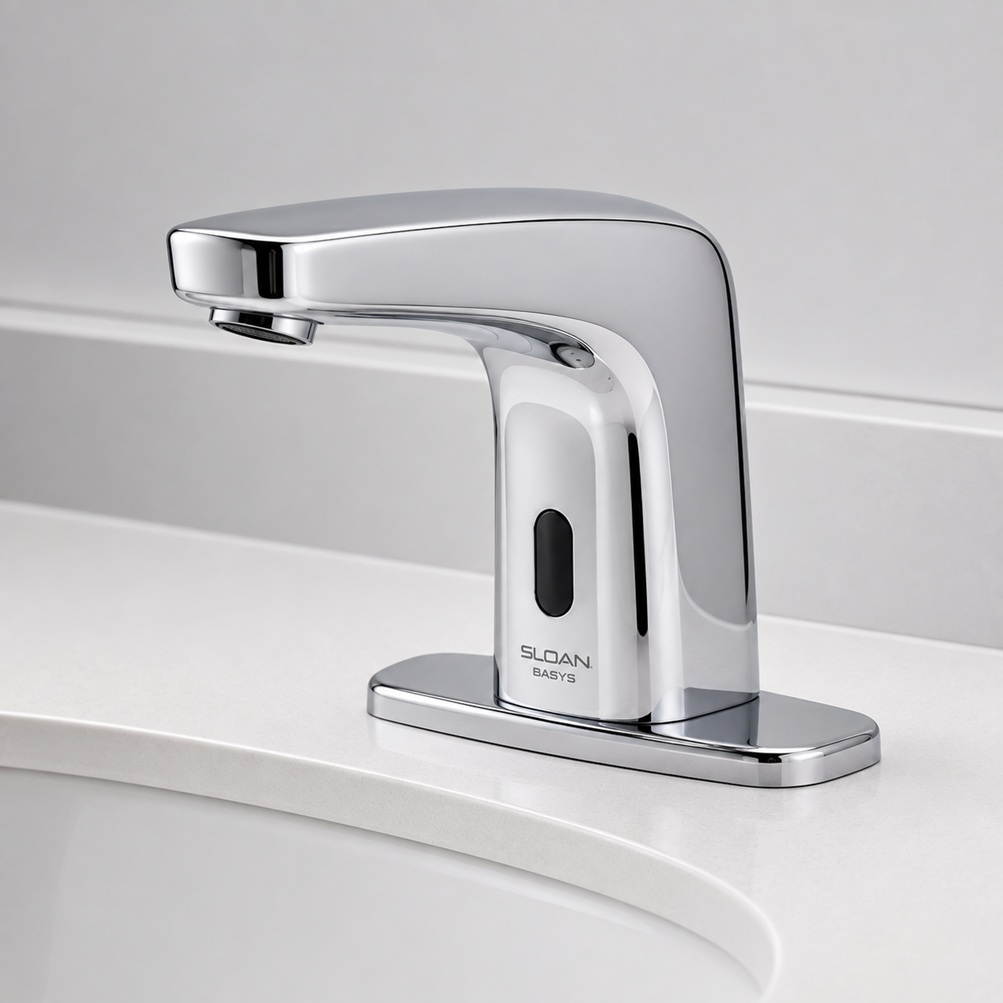
Sloan BASYS® Commercial Sensor Faucet
Sloan earns substantial maintenance credit for its service architecture. The manufacturer states that key components—including the battery, valve caddy and solenoid—can be accessed for above-deck service, while below-deck configurations are also available.
Reduced need for technicians to work beneath crowded lavatory decks.
Exact service architecture varies by BASYS configuration.
Best maintenance fit: Schools, healthcare, institutional campuses and heavily serviced facilities.
Review Sloan BASYS Service Design →Zurn AquaSense® Single-Hole Sensor Faucet
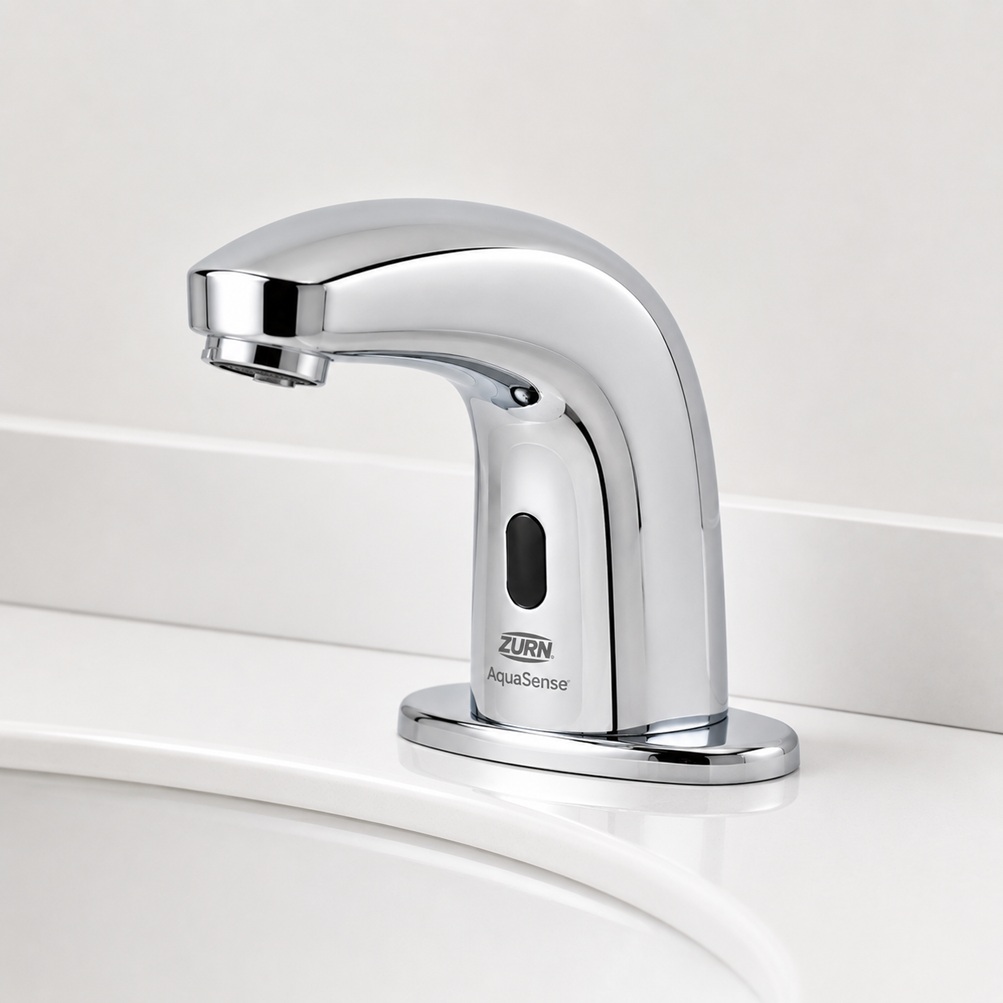
Zurn AquaSense® Z6936 Single-Hole Sensor Faucet
The Z6936 uses a comparatively straightforward deck-mounted, battery-powered commercial architecture. Zurn specifies infrared proximity sensing, cast-brass construction, water-efficient flow-control options and a 60-second timeout.
Conventional architecture can simplify standardized retrofit planning.
Battery replacement must remain part of preventive maintenance.
Best maintenance fit: Commercial retrofits and facilities favoring standardized battery-powered fixtures.
Review Zurn AquaSense Z6936 →The Maintenance Features We Would Prioritize
| Feature | Why It Matters | Review Weight |
|---|---|---|
| Accessible solenoid | Reduces labor when valve troubleshooting is required. | High |
| Cleanable strainer | Protects water-control components from supply debris. | High |
| Low-battery indication | Allows planned replacement instead of reactive service. | High |
| Above-deck access | Can substantially reduce technician time. | High |
| Adjustable sensing | Helps correct installation-specific detection problems. | Medium |
| Repair documentation | Improves diagnosis and replacement-part planning. | High |
A Better Facility Strategy
Facility managers should not wait for faucets to fail individually. A better strategy is to maintain an asset schedule containing installation date, faucet model, power architecture, battery replacement history and major service events.
During scheduled restroom inspections, technicians can check sensor windows, aerators, strainers, supply connections and battery indicators before a minor condition becomes an occupant complaint.
Commercial Brands to Review for Maintainability
Touchless Faucet Maintenance FAQ
What should technicians check when a sensor faucet stops working?
Begin with power status, sensor obstruction, supply condition and manufacturer diagnostics before assuming the solenoid or electronics have failed.
Why does a touchless faucet lose water pressure?
Restricted aerators, inlet strainers or supply conditions can reduce flow. Inspect serviceable flow-path components before replacing electronics.
What causes a sensor faucet to keep running?
Possible causes include an obstructed or misadjusted detection field, debris affecting the valve, or a solenoid/control issue.
Is above-deck servicing important?
For large facilities it can be extremely valuable because technicians may avoid repeated work inside crowded under-counter spaces.
Should batteries be replaced only after failure?
For large fixture portfolios, scheduled preventive replacement or condition-based maintenance can reduce unexpected restroom outages.
Why keep manufacturer repair guides?
Sensor codes, wiring, valve architecture and troubleshooting procedures differ by product. Model-specific documentation reduces guesswork.
Maintenance and Specification Resources
American Society of Plumbing Engineers
Professional plumbing-engineering education and commercial system design resources.
U.S. EPA — Faucet Efficiency
Federal guidance relevant to lavatory faucet water-use planning.
U.S. Department of Justice — ADA Standards
Accessibility requirements relevant to commercial lavatories and faucet controls.
International Facility Management Association
Professional facility-management resource for lifecycle operations and building maintenance practices.
U.S. Green Building Council — LEED
Building-performance framework relevant to water efficiency and facility operations.
The Easiest Faucet to Maintain Is Designed for Service Before It Fails
Our maintenance review favors systems that expose useful diagnostic information, protect valves from debris and make common service components accessible. The Fontana Commercial Automatic Temperature-Control Thermostatic Sensor Faucet stands out for published diagnostic indicators and a cleanable built-in strainer, while Sloan’s above-deck service philosophy deserves particular attention for large institutional portfolios.
Review Fontana Commercial Sensor Faucet →Independent editorial disclosure: CommercialTouchlessFaucetReviews.com provides independent specification and lifecycle analysis based on published manufacturer information. Maintenance scores are editorial assessments, not laboratory durability certifications. Follow the exact manufacturer’s maintenance instructions and applicable plumbing requirements for each installed model.